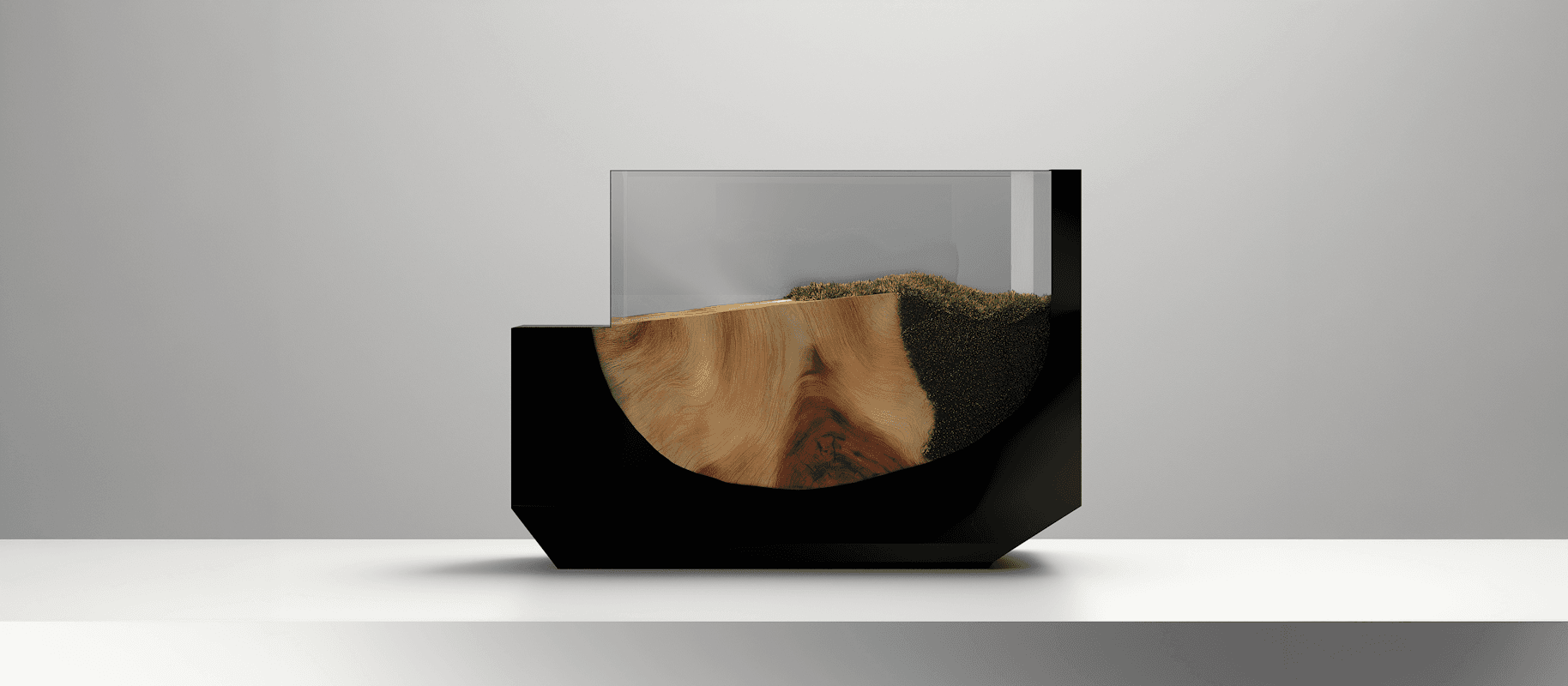
Urban Moss Index
RESEARCH TYPE
Urban ecological observation
ENVIRONMENT
Distributed urban micro-ecosystems
YEAR
2021–2023
(Overview)
The Urban Moss Index study investigates how moss colonies develop across varied urban environments. By observing growth on different surfaces—concrete, stone, metal, and glass—the study aims to understand how microclimates form within dense city structures. The focus is on how moisture, light exposure, and air quality influence the emergence and stability of these small-scale ecosystems.
(Our Approach)
The study was conducted across multiple urban sites, each selected for distinct environmental conditions. Rather than altering the environments directly, the research relied on passive observation supported by localized sensors measuring humidity, temperature, and air composition. Moss samples were monitored over time to track growth density, spread patterns, and surface adaptation. Each location functioned as a micro-environment, allowing comparative analysis across varying urban conditions.
(Key Findings)
0
0
%
Higher moss density observed in areas with consistent moisture retention.
0
0
%
Surface texture significantly influenced initial colony formation.
0
0
%
Increase in growth stability in low-disturbance urban zones.
(Outcome)
Even highly constructed environments can support stable micro-ecosystems when conditions allow.